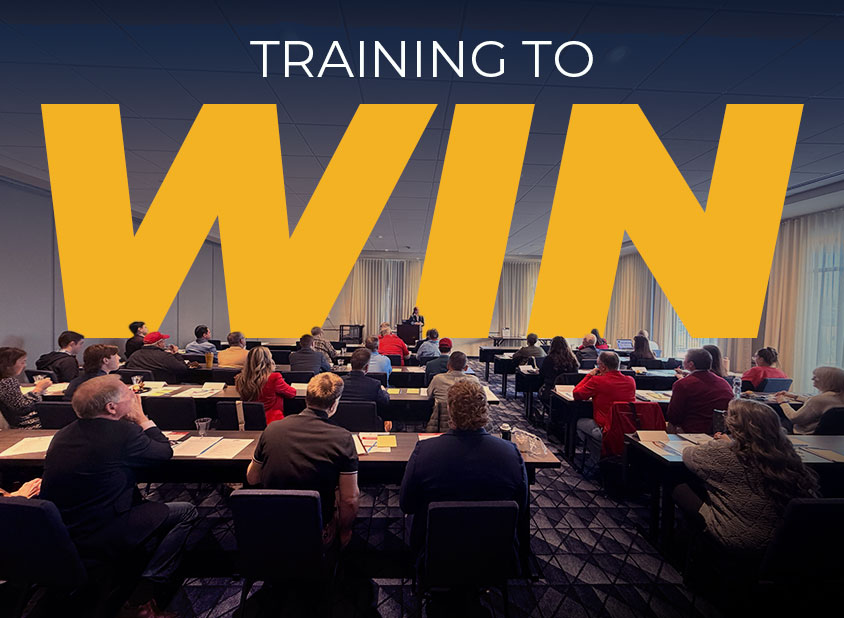

It was disappointing news for the crowds gathered at an election night watch party at the Marriott Cincinnati Airport in Hebron, KY, but to the surprise of many, Kentucky Rep. Thomas Massie delivered a rousing victory speech, rather than a concession speech. Not because he won his primary, but because he knew what he had built was bigger than one election. He lost his seat, but he built a movement.
The results shocked many in the liberty wing, yet the room in Hebron felt energized. Even though he lost the race, Massie won every age demographic except the Baby Boomers. Outside groups and establishment Republicans viewed Massie as one of the last major holdouts against the party’s growing alignment behind Trump. His race became the most expensive congressional primary race in U.S. history; Trump-backed establishment groups poured millions into defeating him.
“Massie may have lost his election, but that is seen as an outrage,” said Barrett Young, the executive director of Make Liberty Win PAC. “That outrage, while it will black pill some people, it'll also make people very angry. And anger is the most powerful motivator in politics. And when you have a bunch of liberty activists all across the country who are mad as hell and they can't take it anymore, well, that's good because that means they'll take action.”
Massie has become a symbol for anti-establishment, pro-liberty principles for young people across the country, not just in his old Kentucky home. For years, he served as one of the most prominent libertarian-leaning Republicans in Congress, known for opposing government spending, foreign intervention, and Republican leadership when he believed they abandoned conservative principles.
Thomas Massie is this generation's Ron Paul. - Derin Stidd, Liberty Action
Stidd believes Massie’s popularity is tied to his genuineness and his unwavering commitment to liberty principles.
“It's a breath of fresh air to young people,” he said. “They're tired of seeing politicians make promises during election season and just to go to Washington and sell out on their promises within the first week or two of being there–Massie's the guy who didn't do that…He always stood for his principles, and he always stood his ground, and he always fought to do what was right. And I think that's something that young people are drawn to.”
Young said we’re seeing a generational divide among younger people–even up to younger Gen X–over what it means to be anti-establishment.
“For those younger voters, they see the establishment as this federal, super PAC orbit that is pushing the Washington consensus on issues like foreign policy, trade, and immigration,” he said.
Young explained that voters see Trump as breaking away from being anti-establishment because of the policy changes in his administration.
“Those are the type of people who came out and voted for Thomas Massie. Those are the types of people who are going to support candidates like Thomas Massie in the future.”
While Massie won the younger voting demographics, the Baby Boomer generation followed Trump’s endorsement of Ed Gallrein.
Republican primaries are traditionally dominated by older, high-turnout voters–a dynamic that ultimately hurt Massie despite his strong support among younger conservatives.
Massie’s district traditionally sees low primary turnout. Early voting turnout was high, which gave Massie supporters hope–most of his supporters are under 65, which is a low turnout group. But what actually happened was older Gen X, Boomers, and the Silent Generation took their already-high turnout rate and “jacked it up to 11,” as Young put it.
“When Massie is talking about starting a movement, what I would just say is he essentially reignited a movement along a much more generational line,” Young said.
Anti-establishment voters have always been part of the Republican Party. But during the Trump era, a split started to happen. Older anti-establishment voters mostly became loyal to Trump and teamed up with the Republican establishment, while the younger generations have started moving in a different direction with different priorities and beliefs.
“You know, it's very hard to be in favor of war if you're the one who's going to get drafted,” Young said. “It's very hard to be in favor of Social Security when you're the one who's paying in and going to get shafted.”
Activists don’t view Massie’s loss as the end; they see it as a rallying cry. To many activists, the loss represents a turning point–one that could ultimately strengthen the movement.
Young argued that the race strengthened the coalition even in defeat. While liberty activists lost a congressman, he said, they gained thousands of energized activists motivated to organize, campaign, and fight for liberty causes in future elections.
“That's a pretty good trade because those thousands and thousands of angry activists will win many, many more elections and do many, many more cool things to pass liberty legislation,” Young added. “And so when you're picking a fight, you want to pick a fight where even if you lose, you get stronger in a loss. I think Massie picked a great fight, and I think we're now much stronger in the loss.”
Stidd warns that the fight isn’t over, and letting Massie’s loss make you pessimistic is missing the larger picture.
“This younger generation, for the first time in a long time, is actually more conservative than the generations that came before it,” he said. “I think there is still a bright future. I think a lot of people want to black pill right now because we lost, Massie lost, and he's our last hope; Massie was clearly not thinking that way, and I don't think we should think that way either. I think the future is still bright if we're willing to roll up our sleeves and put in the work. And I think the Liberty movement is the future of the Republican Party.”
I think the future is still bright if we’re willing to roll up our sleeves and put in the work. — Derin Stidd, Liberty Action
But while Massie’s loss dominated headlines, liberty activists argue the broader liberty base actually gained ground where they believe it matters most: state legislatures.
It’s important not to lose sight of the mission and the victories–despite Massie’s loss, Kentucky’s election day was a success. Four pro-liberty legislators prevailed handily over tough primary challengers. The liberty coalition in Kentucky grew on election night as a whole.
“Part of the reason at the state level we can have more success is we are able to credibly say that our candidates are the most conservative candidates in the race, and Republican primary electorates are more ideological than the general election,” Young said. “And so a lot of those voters, that's what they're looking for. ‘I want the person who's the most Republican. I want the person who's the most conservative.’ Well, guess what? Our people, they're the most and they're the craziest. So you have a path to success.”
Stidd noted that we shouldn’t get lost in D.C. politics; victories at the state level are incredibly important and have long-term impacts.
“There's a reason that Young Americans for Liberty, our CEO Jeff Frazee says, there's a reason that we've chosen to focus on the states and not on Washington,” Stidd explained. “Washington is a swamp, but we can win in Kentucky, we can win in Ohio, we can win in West Virginia, we can win in Wyoming. And my encouragement to young people as they look at the Massie race is that we can still win huge victories for liberty at the state level. And so it's important not to forget about the state level, not to get so focused on the drama of everything that's happening in D.C. that we lose our focus on areas where we can actually have a massive impact, which is the state level.”
Young echoed this sentiment, noting that state-level wins often lead to national victories as well.
“I think that the tension that we all have to deal with is that liberty people, we care a lot about some federal issues,” he said. “We are policy wonks at heart. We have all these things that we really care about that are at the federal level, but you have to fight where you can win, and where you can win is at the state level. And over a long-term time horizon, as you elect more and more state reps and state senators, those are the people who become future congressmen. The truth of the matter is there's only two ways to become a congressman in this country: be very, very rich, or be somebody who was elected before and climb up the ladder.”
YAL and its activists are working every day to push for victories across the states, and that fight is more important than ever.
My message to these people that are new to the fight and they're upset that Massie lost is don't give up, don't quit, roll up your sleeves, stay in the fight. - Derin Stidd
“The big thing I hope they take away from this is within the next four to eight years, if we don't quit and we don't get distracted, despite the fact that Massie lost, you could see something beautiful birthed out of the ashes of this loss if we don't quit. And I think that's the key to it.”
Massie may no longer be heading back to Washington. But the movement he inspired is determined to keep fighting long after his defeat.
To join the fight with Liberty Action, click here









.jpg)