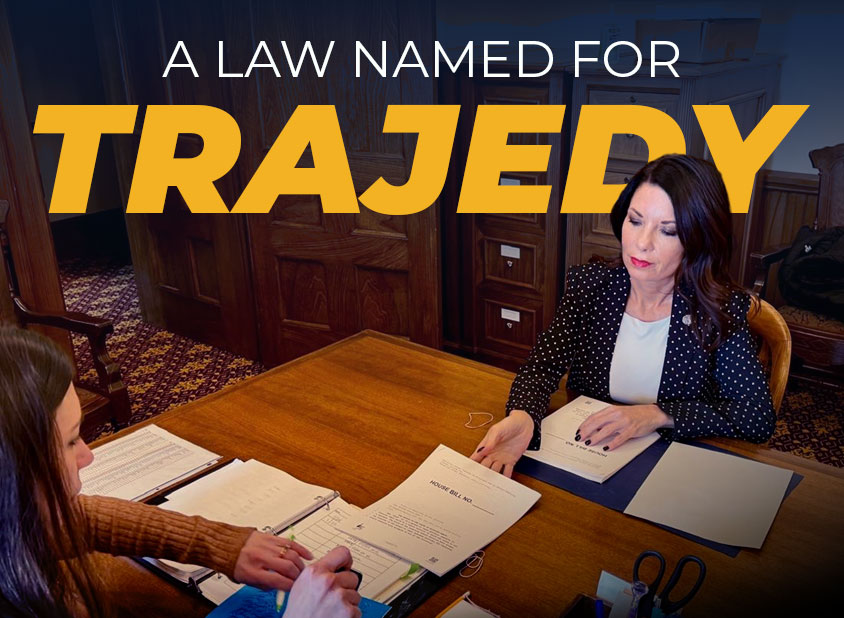

Ohio lawmakers approved $600 million for a new Cleveland Browns stadium, but the subsidy nearly died in the state legislature. Hazlitt Coalition member State Rep. Ron Ferguson's amendment to strip the funding from the budget failed by a single vote, 50-49. Now the controversial deal is facing a constitutional challenge in court, while critics question why one of the world's most valuable sports franchises needed public assistance at all.
Ferguson insists the fight was worth having because the funding infringes on people’s individual liberty.
“Literally one single vote in the state legislature ensured that $600 million of people's money would be given to the Cleveland Browns for a new football stadium,” Ferguson said.
The obvious question is why one of the world's most valuable sports franchises needs government assistance to build a stadium.
“The Cleveland Browns organization is one of the wealthiest professional sports organizations in the country,” said Derin Stidd, the mid-Atlantic field manager for Liberty Action.
In fact, the Browns are worth $6.4 billion according to Forbes, while CNBC values them at $7.15 billion. They consistently rank in the top 50 most valuable sports franchises in the world. According to Forbes, the team generates over $680 million in annual revenue.
“And here they are taking money from Joe the plumber, Bill the cable guy, and Susie the dishwasher to fund their stupid football stadium,” Stidd said.
You're a billionaire, you should be ashamed of yourself even asking these regular everyday Ohioans to pay to build your stadium. - Derin Stidd, Liberty Action
Ferguson said the Browns themselves made it clear they don’t need the money.
“They actually were asked when they were testifying, ‘If you aren't given this money, will you still be moving forward with the stadium?’ To which they said yes,” Ferguson said. “So they didn't need the money. They literally just wanted the money.”
Ferguson’s objection is as philosophical as it is fiscal.
I don't think Ohioans should be paying for a stadium through the force of government, period. - Derin Stidd, Liberty Action
While supporters of the funding claim the stadium will have a positive economic impact, Ferguson is skeptical.
“Your government should never be used to create jobs because they'll never do it as well as those who are operating in the free market.”
Stidd noted that the governor's own economic advisor put out a paper that said the numbers originally published to tout economic growth from the stadium were vastly inflated.
“These sort of stadium programs that rely on taxpayer funding never actually end up paying back the promised tax revenue,” he said. “They always overestimate the economic impact and ignore the fact that people can only spend their money one place at a time.”
The money legislators voted to send the Browns isn’t even the government’s tax-funded money–it’s the people’s.
“Not only is it just ethically the wrong thing to do, but it was also unconstitutional to take somebody's personal money because this wasn't even tax money–this was unclaimed funds,” Ferguson explained. “So unclaimed funds are actually money that belongs to the people of Ohio that was seized without due process and then handed over to another person. And so I made the point that it was unconstitutional.”
A lawsuit was filed stating that it is unconstitutional to seize somebody's property without due process, which Ferguson said is exactly what the legislature did by taking money from the unclaimed funds to give away. The suit alleges that unclaimed funds for a private stadium violates property and due process rights. A Franklin County magistrate judge issued a preliminary injunction in early March while the case is being heard.
Beyond the constitutional concerns, Ferguson said the vote exposed a deeper problem inside the legislature.
“It ultimately passed because people, sadly, that I serve with have more fear of the speaker of the House than they do the voters in their district.”
Ferguson added that many lawmakers agreed with his argument against funding the stadium, but they voted for it anyway because of political pressure from the speaker. He argued that too many lawmakers were more concerned about appeasing House leadership than representing the people who elected them.
If the vote demonstrated the power of legislative leadership, it also demonstrated the power of grassroots activism. Liberty Action mobilized thousands of Ohioans through text messages, emails, petitions, and social media campaigns urging lawmakers to reject the subsidy.
“This budget amendment was something that came up during the primary season, and a lot of these people that voted wrong on this amendment had to answer to their voters for voting wrong during election season, which is how we hold politicians accountable.”
This was the same grassroots activism that pushed Ferguson to a massive win in his primary despite establishment forces spending $1.5 million against him. YAL also pushed candidate Shawn Stevens to victory, as well as Rep. Brian Lorenz.
Ferguson said the constituent grassroots pressure was “tremendous” in helping move the needle.
“It really gave the people that voted against the stadium, it really solidified their confidence they were doing the right thing because they knew they were doing what the district wanted,” he said.
The fact that Ferguson and other Hazlitt Coalition members came so close to stopping the funding shows how powerful grassroots activism and constituent pressure is when it comes to persuading legislators. The near-victory serves as a reminder that constituents can influence major policy decisions when they engage directly with their elected officials.
Ferguson expects to see more sports teams at the door asking for funding.
“Definitely other professional sports teams are going to know that essentially Ohio is open to giving money away…If an outside entity wants something bad enough, basically everything can be purchased for the right price.”
Ferguson added that some of the biggest fights for liberty come down to a single vote.
“If we want that vote to be on our side, that we win by one vote rather than lose by one vote, it's going to take everybody that has a voice speaking up and speaking out.”
The constitutional challenge for the Browns stadium funding lies in the hands of the courts. But the vote for whichever sports team comes knocking next is in the hands of the legislators. When that time comes, it’s important they understand exactly how their constituents want them to handle it.









.jpg)