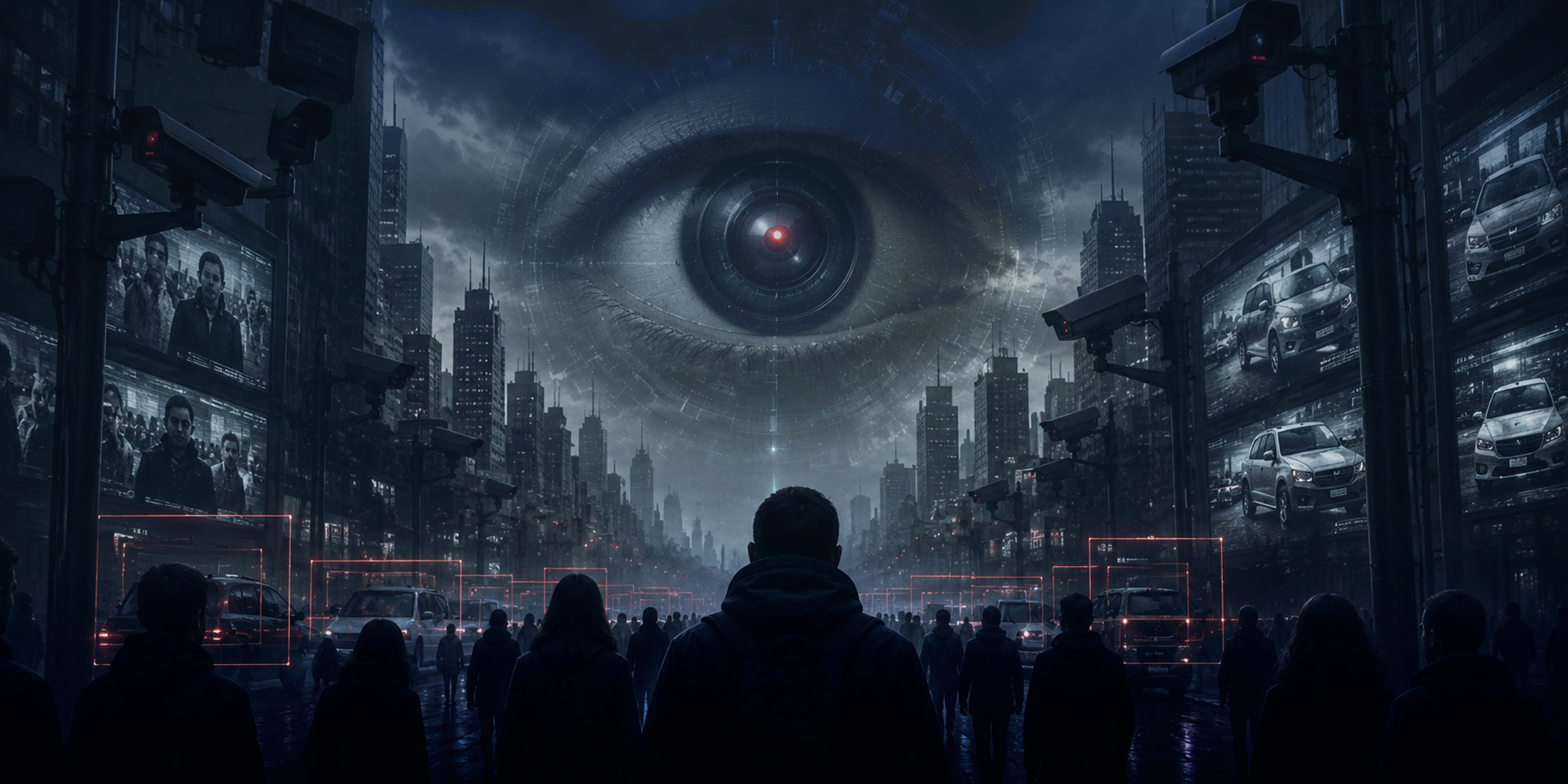

Did you know there might be cameras recording information about your vehicle every time you drive to work, the grocery store, or the pharmacy? These AI-powered cameras can identify vehicles by much more than a license plate number. Now, a Hazlitt Coalition member in Maine is fighting to ban the technology before it becomes more widespread.
“The one by my house, it hits me every time I go on the turnpike…Daily commuters, their whole habits are there,” Rep. David Boyer said. “These are pinging tens of thousands of license plates every day here in our state. They're not just going after criminals. They're pinging everyone.
“Once I realized what these were and that they were AI-powered and very different from normal CCTV, that concerned me,” Boyer said.
Once I realized what these were and that they were AI-powered and very different from normal CCTV, that concerned me. - Rep. David Boyer
Boyer is taking that concern to the state legislature. He plans to introduce a bill next session that would ban Flock-style AI-powered license plate reader systems statewide. While local activists are working to remove cameras city by city, Boyer argues the issue requires a statewide solution because residents regularly travel between communities that may have different policies.
Maine activists are making noise at the local level as well. The town of South Portland voted recently to end their contract with Flock and remove the cameras.
“People don’t want this,” Boyer said. “We're running a local campaign in Auburn. We collected over 1,200 signatures on election day, we need a couple hundred more. We're going to put it on the local Auburn ballot in November to remove these cameras.”
Maine isn't the only place where concerns about AI-powered license plate readers are growing. Activists across the country have begun organizing against the technology, including a planned national week of action focused on Flock cameras. Similar debates are beginning to emerge in other states as residents and lawmakers grapple with questions about privacy, surveillance, and how much information should be collected about ordinary citizens' daily lives.
According to Flock Safety, its cameras use AI technology to identify vehicles by license plate numbers, make, model, color, and other identifying characteristics like bumper stickers—creating a “vehicle fingerprint.” Flock says their cameras don’t include facial recognition, but they do capture images of drivers and analyze their general appearance.
“They track everyone, creating a giant dragnet plugged into a national AI database, run by a third-party, private international for-profit corporation,” Boyer said. “There are real concerns about data privacy.”
They track everyone, creating a giant dragnet plugged into a national AI database, run by a third-party, private international for-profit corporation. There are real concerns about data privacy. - Rep. David Boyer
For Hazlitt Coalition members like Boyer, the fight isn't really about cameras—it's about privacy. As governments gain access to increasingly powerful surveillance technology, lawmakers are being forced to decide where the line should be drawn.
Flock cameras are largely used by law enforcement, but they’re also utilized by HOAs, retail businesses, and private security companies.
“We want to help law enforcement do their job, but we also have rights and liberties that are protected by the Constitution,” Boyer said. “We could put cameras up in everybody's homes if we wanted total security, but we don't do that. How many rights and liberties should we give up to feel safer?”
For many liberty activists, the concern isn't just how these cameras are being used today—it's what they could become tomorrow.
“I think folks are concerned about big government weaponization of this data,” Boyer said. “Between COVID, what's going on now, and what happened before COVID, it's not hard to imagine when one team gets in them using this data to go after the other team.”
The issue has created an unusual coalition of supporters and opponents from across the political spectrum.
“This isn't a Republican or Democratic issue,” he said. “It's a human issue. It's a constitutional issue.”
Boyer hopes that by raising awareness of the issue, other states will take notice and move to ban the cameras before they become more prevalent.
“It's gonna be up to state legislatures to defend the rights and liberties of Americans because Congress has completely abdicated their job in that regard,” Boyer said. “We can't sit idly by. We've all seen the movie, we know the script. It's happening before our eyes.”
Whether Maine becomes the first state to ban the technology remains to be seen. But Boyer hopes the debate forces lawmakers to answer a larger question: where should the line be drawn between public safety and personal privacy?








.jpg)