
Minnesota State Rep. Drew Roach, a Hazlitt Coalition member, had no idea there were Flock cameras in his district until he drove past one. “I was totally taken aback,” he said of the discovery. He posted a video highlighting the cameras, and the next day he requested records on the cameras—then the county abruptly canceled its Flock contract one day later.
On Sept. 2, he requested information on all eight Flock cameras, including all vendor information, contracts, date of installs, and location of installs. Roach received the first batch of records on Sept. 17.
A memo, dated Sept. 2, confirmed changes to the sheriff’s office’s Flock data-sharing practices that had been discussed and implemented on Aug. 19. Roach does not know whether that memo was sent before or after he submitted his request that day.
Roach also discovered an invoice that was paid to Flock for $68,000 for a two-year contract set to end in December 2026. There had been two additional Flock cameras installed as recently as May 2026.
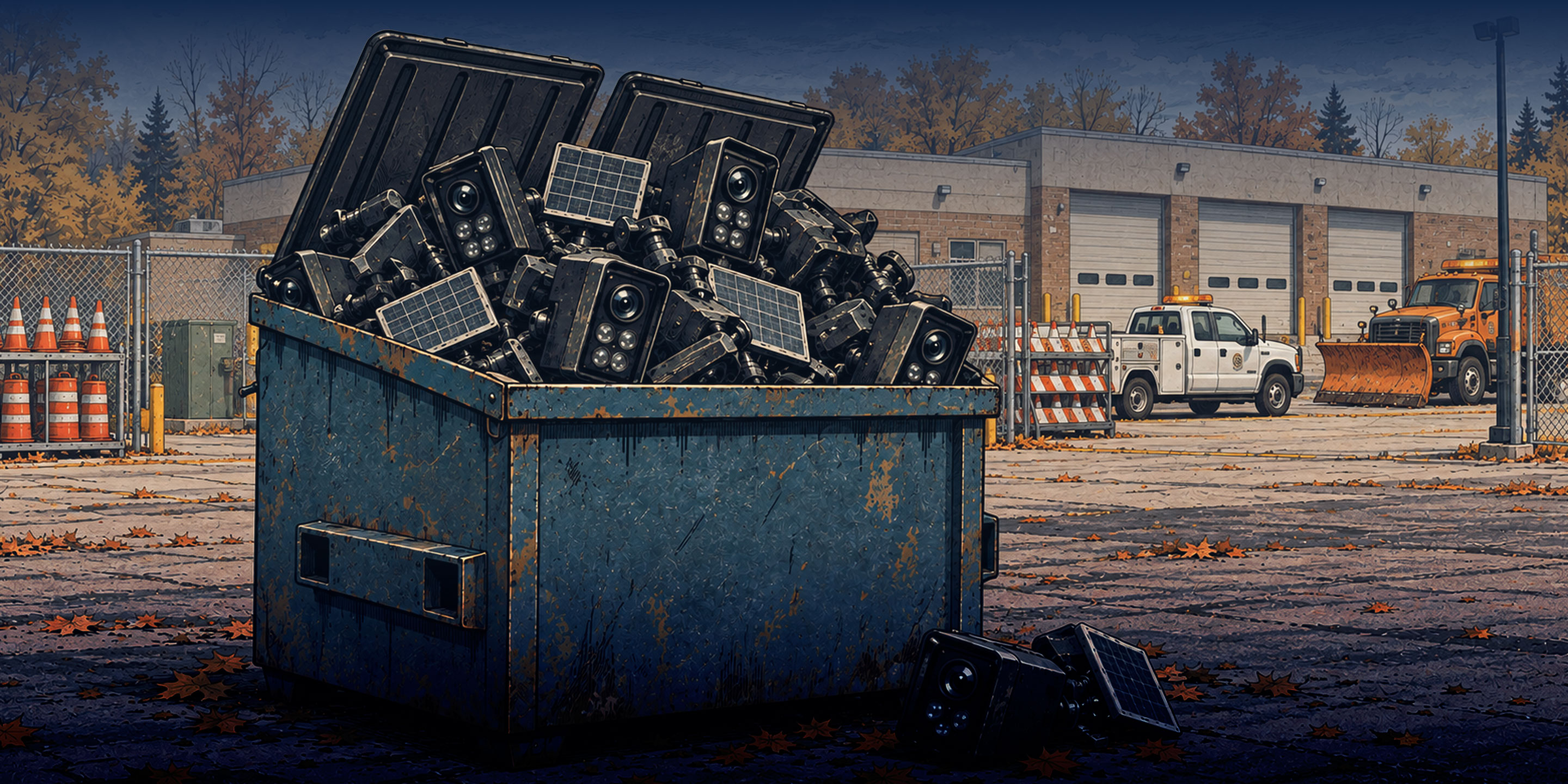
Another memo, dated Sept. 9, informed command staff that the Flock contract had ended effective Sept. 3 and instructed them to end system access and arrange the return of equipment.
“They abruptly terminated that contract effective Sept. 3, even though they had paid through the contract until the end of 2026,” Roach said. “Some questions are yet to be answered as to why they abruptly ended it.”
However, it appears the termination wasn’t shared with staff until Sept. 9, when an internal memo to the command staff was sent out stating that the Flock contract was terminated effective Sept. 3. Roach couldn’t find a public announcement about the cancellation.
The timing raised questions for him, but Roach said he has no evidence that his records request influenced the county’s decision.
Dakota County Sheriff Joe Leko explained the decision in a published candidate questionnaire. He said the sheriff’s office ended its eight-camera pilot on Sept. 3 after hearing concerns about data privacy and finding that the cameras in its rural patrol area produced limited results. Leko said the cameras had also helped deputies make arrests and solve crimes.
Roach said ending the program hasn’t answered everything. He’s still waiting for a second batch of records and said he has yet to find documentation explaining how the eight cameras were approved. He also acknowledged that he does not know what approval process was required. “We don’t have answers yet,” he said.
Roach plans to revisit his prior legislation on ALPR cameras with the intention to add “a little bit more teeth in it,” he said.
Want Flock cameras gone from your state, too? Tell your state legislators to ban them.