
June 2 was a huge day for the liberty movement. Make Liberty Win PAC helped oust 14 anti-liberty incumbents across three different states. Montana’s legislature saw the biggest change, ridding the House of half of the ‘Dirty Dozen’ and cutting back the Senate’s ‘Nasty Nine.’ These victories present Liberty Action with a greater opportunity to get liberty legislation passed in Montana and transform the state.
LA Senior Legislative Advisor Erik Mortensen said it’s highly unusual to see so many incumbents lose their primary.
“It's a very conservative state, but the people are promised the same campaign promises time and time again,” he said. “And now with this big removal in Montana and these other states, there's a better chance that we can get some of these things to move from a campaign promise to a policy that's actually been delivered for the people.”
Montana voters were given empty promises from Republican legislators that abandoned their principles to side with the liberals and stymie liberty priorities. In the House, this was the Dirty Dozen. In the Senate, the Nasty Nine.
Montana Liberty Rep. Tom Millett said the people of Montana were strongly motivated to oust these “pseudo-Republicans.”
“We thought we were going in there with Republican majorities this session, and we actually did not,” Millett said. “They got a lot of bad legislation passed, and it made us mad. So how do you fix that? Well, you get rid of the Nasty Nine, and you try to get rid of some of the Dirty Dozen in the House. And that's exactly what we started planning on doing. And we were successful.”
Millett said the House will be significantly stronger in the next session, allowing more liberty legislation to advance.
“We actually increased principled conservatives from 32 to 35, and the RINOs decreased from 12 to 6.”
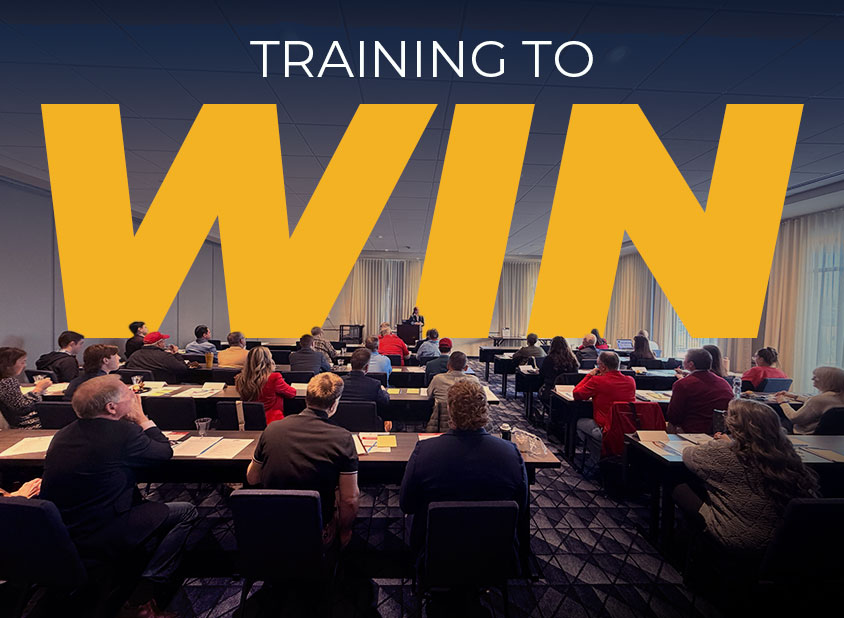
Liberty Action took an early interest in Montana, identifying candidates who may be future members of its Hazlitt Coalition and providing effective training on how to win campaigns. Mortensen said this model can be effective across the country.
"What has happened in Montana and South Dakota and happening in Wyoming and other states across the country can be done just about anywhere."
Montana was by far the largest effort, with our sister organization, Make Liberty Win PAC active in 40 races across the state.
Make Liberty Win PAC focused its resources on viable races using what its executive director, Barrett Young, calls the “three strikes method.”
“We want to fully saturate three negative attacks on a candidate,” he explained. “So basically find three issues where you've got votes, bad votes, idiotic statements they've made, et cetera, stuff that you can pin them on. And you want to tell the voters, ‘Hey, it's three strikes you're out.’”
Incumbent voting records became the central issue. MLW deployed calls, texts, mail, and a powerful door knocking strategy they call mail ballot chase. Many western states like Montana are mail elections; almost every voter receives a ballot in the mail.
Young said they would send campaign messaging to voters, and then door knockers would encourage them to mail their ballots back.
“We were able to, because of the mixture of the negative campaigning and the door knocking, really have a good one-two punch where we tried to get people to make up their minds about who to vote for before the mail ballot arrived,” he explained. “And then once the mail ballots arrived, we were saying, ‘Hey, we just need to talk to these people and get them to turn them in.’
“One of the big things we had going for us is we are the meanest, nastiest sons of bitches in the room,” Young continued. “We were the ones actually doing the aggressive negative campaigning against these establishment hacks.”
Make Liberty Win PAC had lots to work with in Montana. Mortensen explained what issues drove votes.
“The single most important issue that resonated with people was property taxes,” he said. “Property taxes are sky-high in Montana, and people want to see them either cut or completely eliminated. People want to see it repealed, and that’s what we're trying to do.”
Millett said affordability is a major issue in Montana, and the property tax legislation didn’t solve the problem.
“They tried to fix property taxes, but instead of fixing it, and reducing the property tax burden on everybody, what they did is they shifted it,” he explained. “They shifted it from residential property owners onto small businesses, ag communities, ranchers, and corporations.”
Mortensen said forcing difficult votes is critical because it creates a record voters can evaluate later.
“That way we set up kind of a win-win,” he explained. “If they vote for it, great. If they don't vote for it, okay, it’s time to ensure the constituents back home know exactly what their representatives are voting for and hold them accountable for it.”
Millett said it was important to tell voters how their representatives voted on issues like property taxes.
“That was one of the strategies, was to just tell voters, ‘This is the way your legislator has been voting.’ And I think it worked,” he said. “If you don't point that out to voters, they're probably not going to go look and see how their legislator votes. Most people are busy with their lives, they just don't have the time to do that.”
Mortensen said he’s hopeful for a shift in those that did survive their primaries.
I expect that there will be some folks in Montana that are going to at least somewhat change their political behavior once they see, ‘Holy cow, the political environment around me is starting to change.’ - Erik Mortensen
The victories in Montana prove that when liberty legislators force difficult votes, constituents are better informed about where their representatives really stand, and principled challengers step forward. On June 2, the liberty movement saw a dramatic change that will re-shape legislatures and move these states closer to becoming Liberty Lighthouse States.







.jpg)