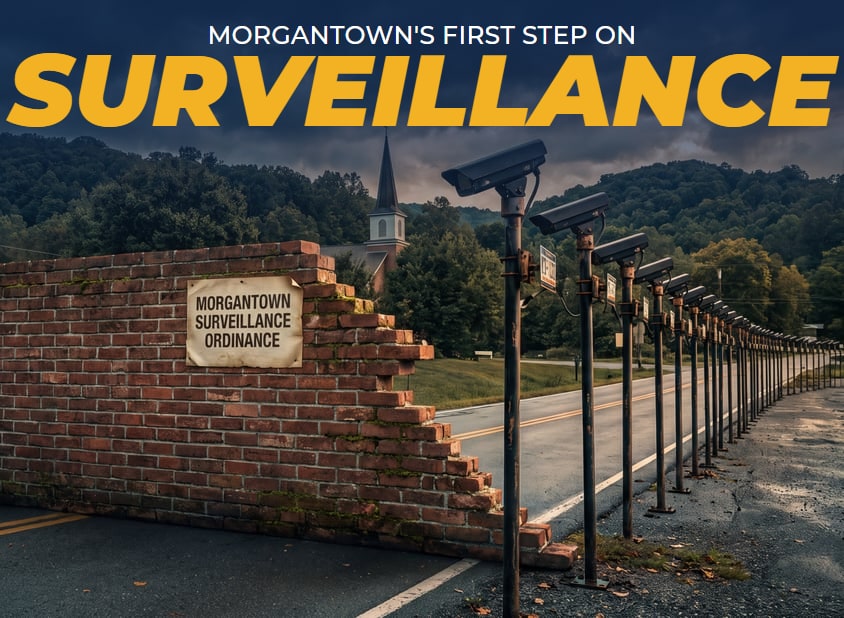

“We just got our pickup trucks and a ladder and went out and covered them up,” Matthew Durham, chairman of the Oconee County Council in South Carolina, said of the county’s Flock Safety cameras. The night before, the council passed an ordinance barring county resources from supporting mass surveillance systems.
Earlier that year, Durham didn’t know what a Flock camera was. After investigating residents’ concerns, he led the effort to end the county’s use of the cameras.
An Oconee County resident contacted Durham in March asking about the Flock cameras in the area.
“When he first reached out to me, I said, ‘Well, it’s a license plate reader, what's the big deal?’” Durham said.
As Durham investigated, he became concerned about the interconnected cameras’ ability to build a profile of someone’s movements. “That's a completely different issue than a picture taken at a particular location.”
Durham said the cameras had been installed without the council’s knowledge.
“County council never voted to approve the installation of them,” Durham said. “It was installed in 2022, and never came before the county council for a vote.”
The sheriff paid for the cameras out of a line item in his budget for data processing, and it was below the threshold that required a council vote, according to Durham. When council members learned about the cameras this year, they began researching the system and looking for ways to intervene.
Durham said the council has authority over county contracts under South Carolina law, giving it a way to address the Flock system.
“About March, April I started getting a good grasp on what the system was capable of, and it became clear to me that it's a violation of our constitutional rights and privacy,” Durham said. “So from that point, I started trying to draft an ordinance, and then the public just kept reaching out.”
By midsummer, Durham said he was receiving multiple messages a day about the Flock cameras.
Durham said law enforcement officials pushed back, arguing that the cameras were a useful tool that made their jobs easier.
“There's lots of things we can do to make law enforcement's job easier, but we don't do that because we restrain the government in this country,” Durham said. “We could do away with having to have a warrant to search somebody's home. Obviously that would solve more crimes, but we restrain the government for a reason.”
The ordinance bars county resources from supporting mass surveillance systems and withholds discretionary county funding from municipalities that continue participating in them.
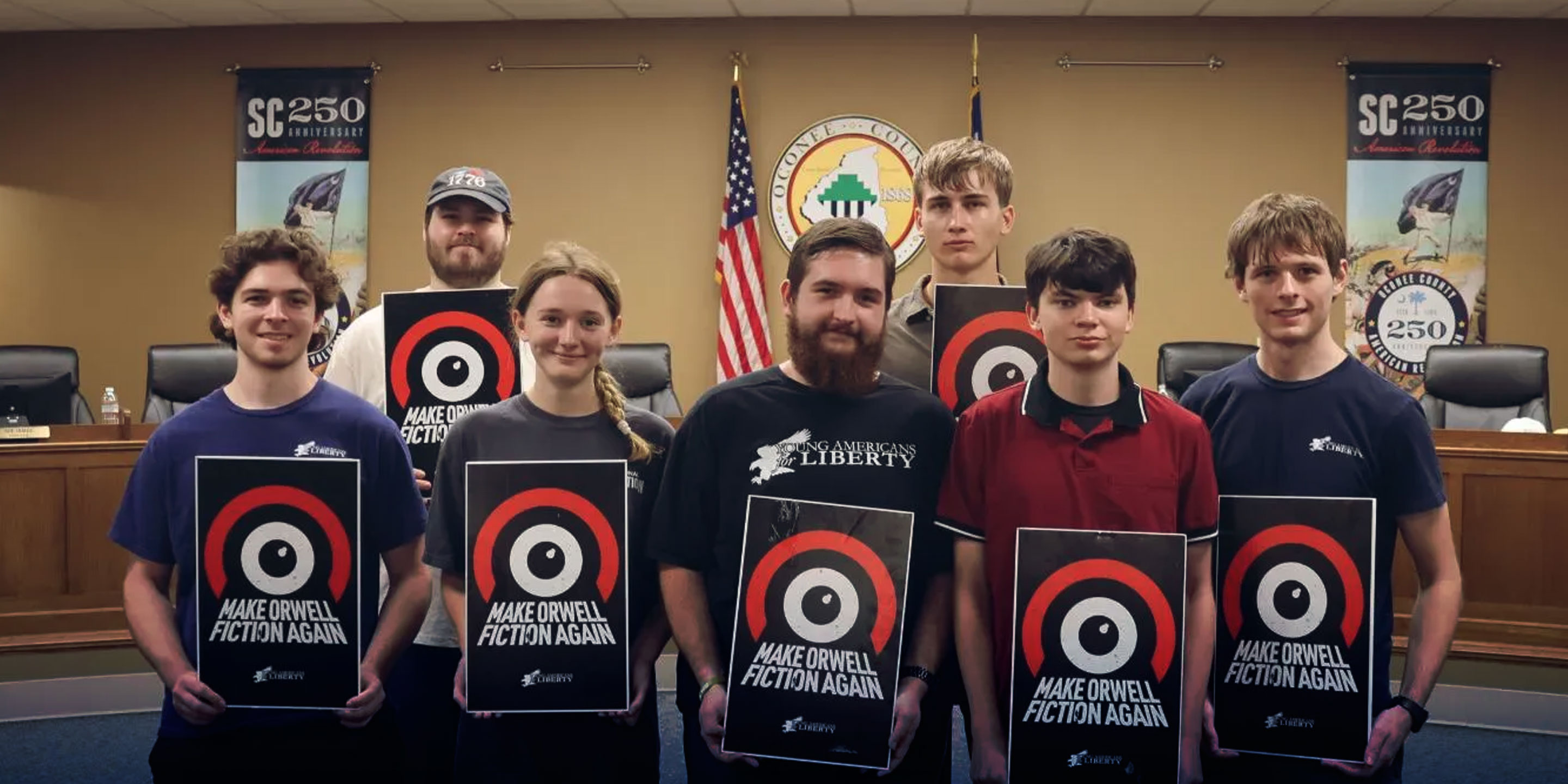
Young Americans for Liberty students attended all three readings of the ordinance and spoke against the cameras, Durham said.
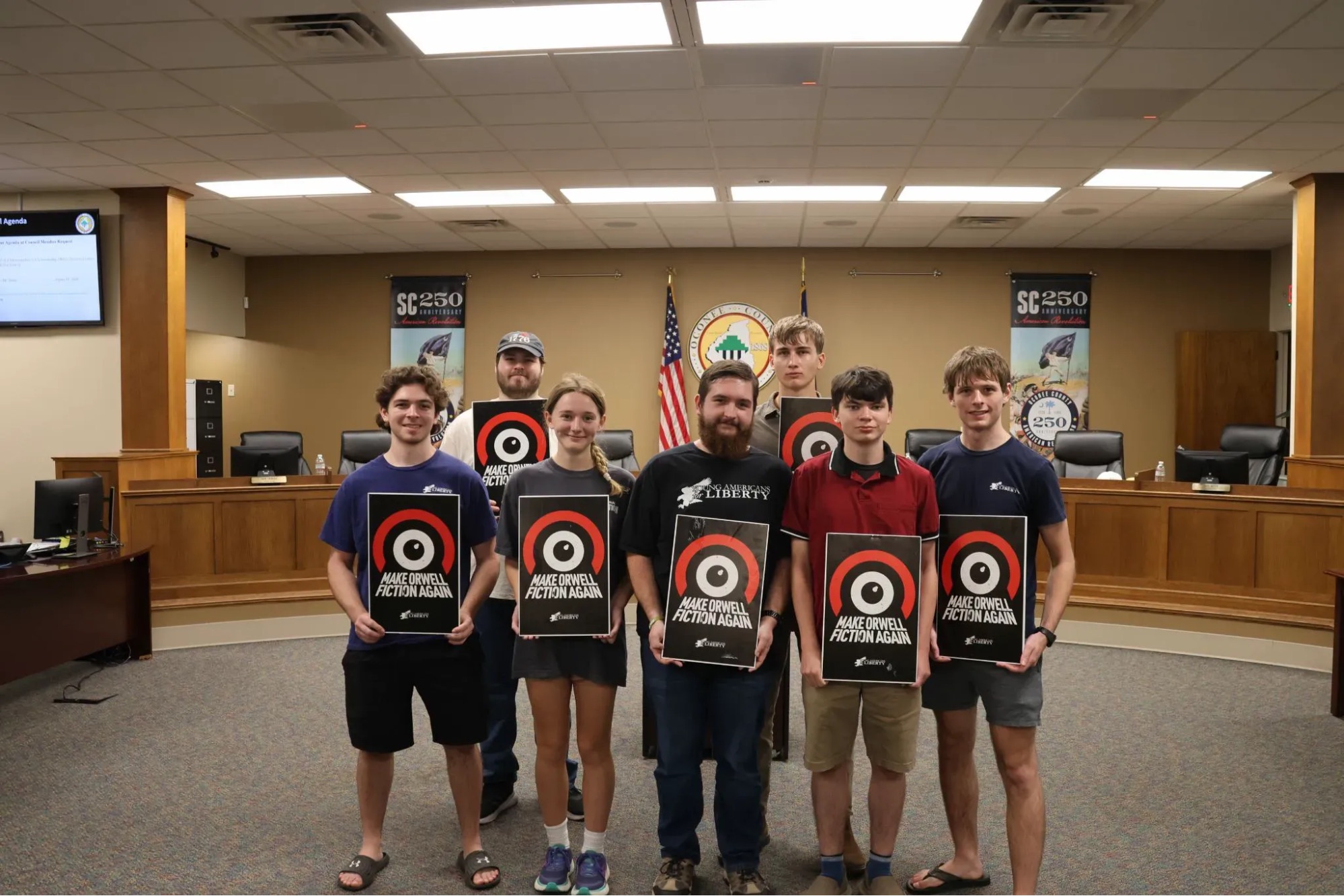
“They came out and spoke publicly, had a good number in the crowd too, and they held up some signs,” he said. “They were active in getting out and letting people know.”
The ordinance passed each reading 4-1.
“In the council meeting for a third reading, I added on a motion that upon passage the county administrator would coordinate to have the cameras removed and then covered up until they are removed,” Durham said.
Durham said the county gave Flock two weeks to remove the cameras. At the time of the interview, he believed they remained standing and covered beyond that deadline.
“We're going to have to take further action and communicate with Flock to get them removed,” he said.
Durham said other county councils in South Carolina have pointed residents to the independently elected sheriff rather than taking action themselves.
“Every county council in South Carolina at least has the same authority that we have granted to us by state law, and they have the same authority to handle the situation the same as we did in Oconee County,” Durham said. “To me, they don't only have the ability to do that, they have the obligation to do it based on the oath of office that they took.”